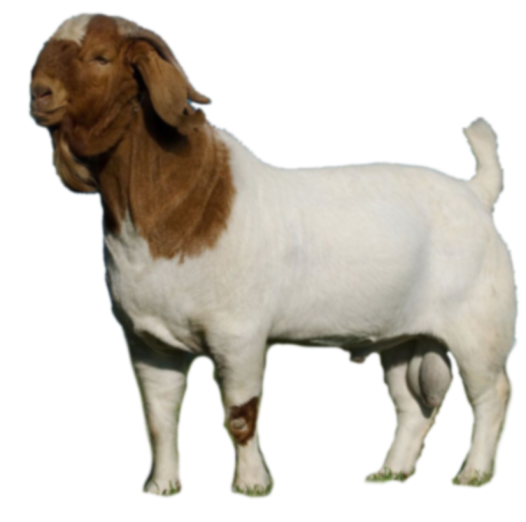
Boer vs Khari Goat
A Boer cross grows about twice as fast and produces more meat, but costs more to buy and needs better feed and shelter. The Khari is hardier, cheaper and thrives on rough grazing. For commercial meat production a Boer cross earns more; for very low-input farming the Khari is hard to beat.
बोयर क्रस झन्डै दोब्बर छिटो बढ्छ तर बढी दाना र राम्रो खोर चाहिन्छ। खरी बाख्रा बलियो र सस्तो हुन्छ।
Updated
Side by side
| Khari (local) | Boer cross | |
|---|---|---|
| Daily weight gain | 50–80 g | 120–200 g |
| Market weight | 20–25 kg at 12+ months | 40–45 kg at 9–12 months |
| Dressing percentage | 40–45% | 45–50% |
| Purchase price | Low | Higher — see the price list |
| Feed requirement | Low; thrives on grazing | Higher, especially protein |
| Shed requirement | Basic shelter | Dry, well-ventilated shed |
| Heat and humidity tolerance | Excellent | Good in crosses; poor in pure Boers |
| Disease resistance | Excellent | Good in crosses |
| Twinning | Sometimes | Commonly |
Where the Khari genuinely wins
- Very low-input systems. If goats graze rough land with little or no concentrate, the Khari converts that better than any cross.
- Harsh climates. Cold high hills, or areas where shelter is minimal.
- Low capital. Cheaper to buy, so a bigger herd for the same money.
- Local disease resistance. Generations of natural selection in exactly your conditions.
Where the Boer cross wins
- Time to market. Half the months of feeding per kilogram of meat produced. This is the main financial argument.
- Meat per animal. More weight, and a higher share of that weight as meat.
- More kids. Higher twinning rate means more animals to sell per doe per year.
- Festival demand. Bigger, better-muscled animals command a premium before Dashain.
Which one earns more?
For commercial meat production with a decent shed and reliable fodder, the Boer cross earns more — not because the animal sells for more, but because it spends far fewer months eating before it gets there. Feed is the largest running cost on a goat farm, so halving the feeding period matters more than the purchase price.
The approach most Nepali farmers take
You do not have to choose. Keep your Khari does — they are already adapted to your land — and buy one pure Boer buck to cross with them. The kids get Boer growth and Khari hardiness, and you keep the resistance that generations of local breeding built up.
Common questions
Is a Boer goat better than a Khari goat?
Can I cross a Boer buck with Khari does?
Do Boer crosses need more feed than Khari goats?
Read next
Boer Goats in Nepal
What a Boer goat is, why it grows twice as fast as local breeds, how it handles Nepal's climate, and how crossing works. Written in plain language for farmers.
Boer GoatsBoer Percentages Explained
What 75%, 87%, 93% and 100% Boer breeding actually mean, how each generation is produced, and which percentage suits your farm and budget.
Grow BiggerFeeding Plan for Growing Goats
How much to feed a goat by body weight, a concentrate mix from ingredients available in Nepal, and the fodder trees goats prefer.
Questions about your own goats?
We farm Boer goats in Chitwan and are happy to talk through your situation — which breeding suits your district, what stock costs, or how to fix a problem on your farm.