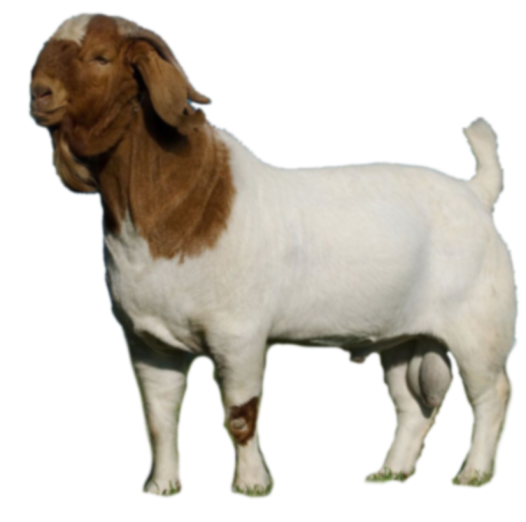
Boer Goats for Sale
Four grades of Boer breeding, priced per kilogram of live weight. Not sure which one suits your farm? The purity guide walks through it.
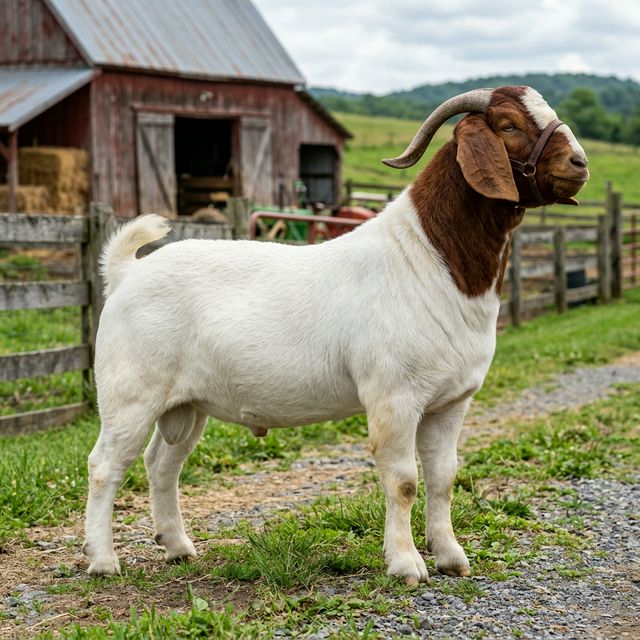
100% Pure
NPR 1,900 – NPR 2,500
per kg live weight
Both parents are pure South African Boer. Bought as a breeding buck, one animal upgrades every kid born in your herd for years. This is genetics, not meat — see the purity guide before buying pure for fattening.
Best for: Breeding programmes. Buy a pure buck to upgrade a whole herd.
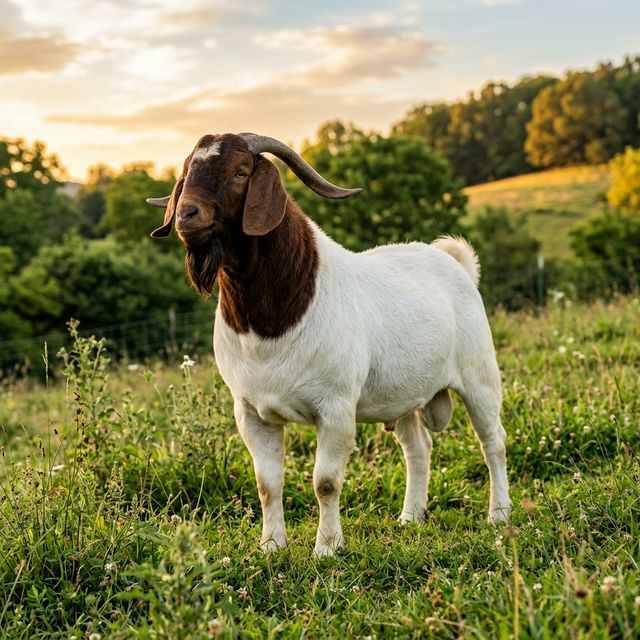
93% Crossed
NPR 1,500 – NPR 1,900
per kg live weight
Grows fastest of the crosses and produces meat close to a purebred. Needs a dry, well-ventilated shed and planned feeding for all twelve months to show that advantage.
Best for: Farms with good sheds and feed, aiming for maximum weight gain.
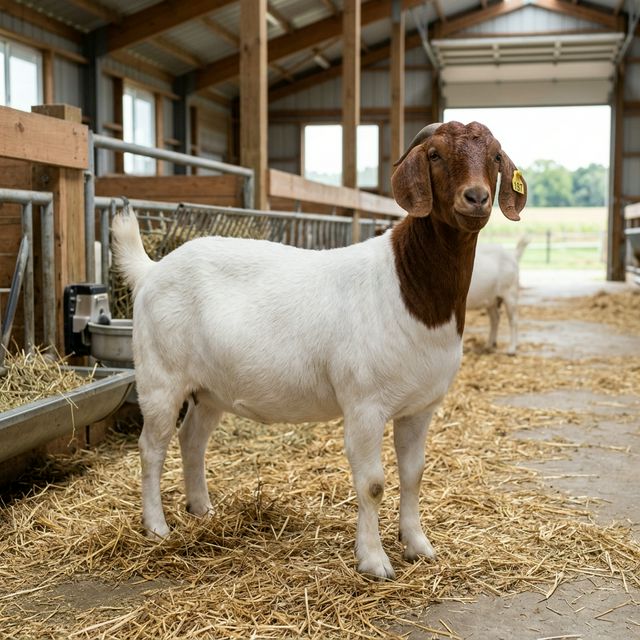
87% Crossed
NPR 1,200 – NPR 1,500
per kg live weight
The grade most commercial meat farms settle on. Looks and grows very like a pure Boer while keeping useful local resistance, and forgiving enough to survive a mistake.
Best for: Commercial meat production with local hardiness retained.
75% Crossed
NPR 900 – NPR 1,200
per kg live weight
The safest starting point. Far faster growing than a local goat but still hardy on ordinary grazing, in the hills, and through the monsoon. Best choice for a first-time farmer.
Best for: First-time farmers and hill districts. Hardiest, cheapest entry.
Nationwide Transportation Available
We safely transport pure and crossed Boer goats from Chitwan to farms across Nepal. Our delivery network ensures your goats arrive healthy and stress-free. Contact us for bulk order delivery rates.
Call for Delivery DetailExplore The Anatomy
Click the points on the 3D model below to learn exactly why the Boer Goat is the undisputed king of meat production.

Feature 1
Distinctive Head
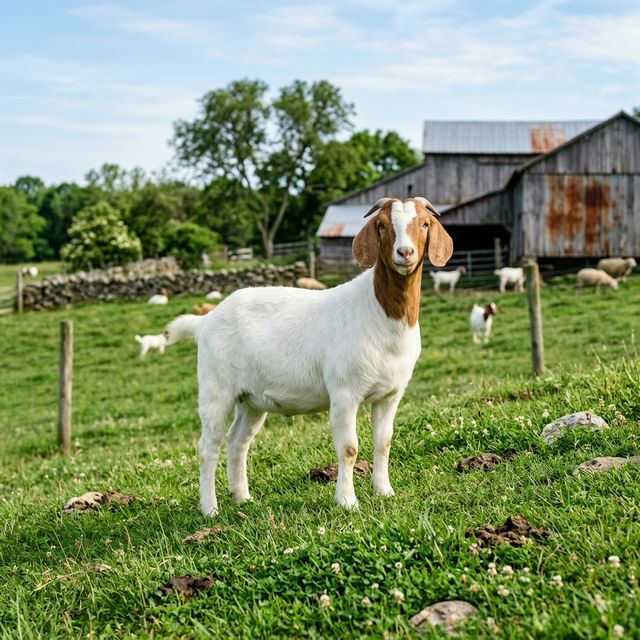
The Roman nose and long, pendulous ears are the defining trademarks of a pure South African Boer. These traits help them regulate heat in hot climates like Chitwan.