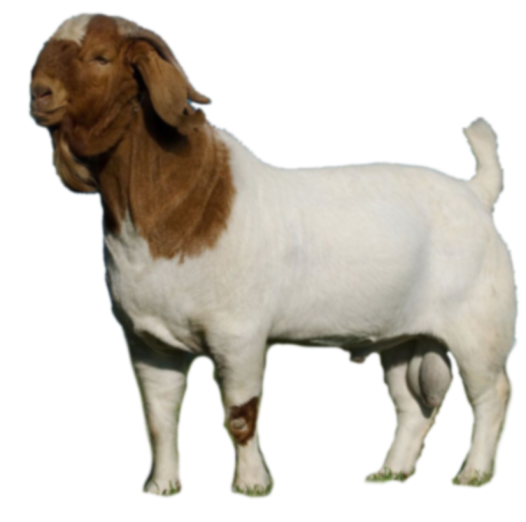
Why One Good Buck Changes Your Whole Herd
A buck passes half his genes to every kid he sires, so one pure Boer buck crossed with local does makes every kid a 50% cross. Breeding the best of those daughters back to a Boer buck lifts the next generation to about 75%, then 87%. One animal upgrades a herd over years — which is why it is the cheapest way in.
Rewritten in plain language on .
The most common thing we hear is that Boer goats are too expensive to start with. That is true if you plan to buy a herd of them. It is not true at all if you buy one buck.
Why one animal matters so much
A doe gives you her kids. A buck gives you every kid on the farm. Serve 25 or 30 does with one good buck and every single kid born that season carries half his genetics — so the money you spend on him is spread across the whole herd, not one animal.
| Generation | Cross | Boer content |
|---|---|---|
| First | Local doe × pure Boer buck | 50% |
| Second | That daughter × pure Boer buck | 75% |
| Third | Her daughter × pure Boer buck | 87.5% |
You keep the best females each generation and sell the males. The herd improves on its own, using animals you bred rather than animals you bought.
Why the local does are worth keeping
Local does are already suited to your weather, your fodder and the diseases in your area — generations of them have survived exactly the conditions your farm has. That resilience is genuinely valuable, and crossing keeps it while adding Boer growth. Replacing your does with pure Boers throws it away and buys you an animal that needs more looking after.
What to look for in a buck
- Dark skin around the eyes, nose, under the tail and on the scrotum. This is much harder to fake than a brown head, and colour alone proves nothing.
- Wide through the shoulder and hindquarter. That muscling is what he passes on.
- Strong, straight legs placed well under a deep body. He has to work.
- Both testicles even and sound. Ask, and check.
- Walk him. Lameness hides easily in a standing animal.
- Ask to see his parents, and the vaccination record with dates.
The one thing to plan for
After two or three generations his daughters and granddaughters are in the herd, and he cannot be used on them. Plan to bring in a second unrelated buck before that point — breeding close relatives produces weak, small kids and undoes the progress you paid for.
Gopal Gautam
Founder, Jagatpur Goat Farm. Breeding Boer goats in Chitwan since 2072 BS.
More from the farm
How We Make Silage for the Dry Months
Chopping, packing and sealing surplus monsoon grass in bags so the herd does not lose weight from December to April. What we do, and the two mistakes that ruined our first batches.
MoneyThree Mistakes That Cost New Goat Farmers the Most
Not the mistakes people expect. Buying the wrong percentage, building the shed last, and counting kids born instead of kids sold — each one quietly takes more money than any feed decision.